Internal linking is a crucial element of SEO strategy, especially for ecommerce sites where navigation and hierarchy can directly influence both user experience and search engine rankings. Ecommerce sites often have errors that can hinder their performance. Here’s a look at some common internal linking mistakes and how to avoid them.
- Overuse of Exact-Match Anchor Text
While it’s important to use descriptive and relevant anchor texts for your internal links, relying too heavily on exact-match keywords can be problematic. Search engines might view this as manipulative, potentially leading to penalties. Instead, vary your anchor text while still keeping it relevant to the linked page’s content. For example, if you’re linking to a page about “women’s leather boots,” alternate anchor texts like “top-rated leather boots” or “stylish boots for women” can be used to maintain natural flow and SEO integrity.
- Linking to Low-Value or Irrelevant Pages
It can be tempting to interlink as many pages as possible to spread page authority across your site. However, linking to pages that don’t offer much value to your users (like outdated product pages or irrelevant blog posts) can dilute your site’s overall thematic relevance and user experience. Focus on linking to content that enhances the shopper’s journey, like related product categories, popular products, and informative blog entries that genuinely support the user’s shopping experience.
- Creating Overly Complex Navigation
Complex site navigation isn’t just a hurdle for users; it also makes it difficult for search engines to crawl and index your site efficiently. A convoluted navigation system with too many sub-levels can bury important pages, making them harder to find both by users and search engines. Simplify your navigation by structuring it in a clear, hierarchical manner. Limit the number of categories in your main menu and ensure that every page is accessible within a few clicks from the homepage.
- Neglecting Content Hubs
Content hubs (or clusters) are groups of related content that revolve around a central theme linked by internal links. Neglecting to create these hubs can result in missed opportunities to boost page authority and improve keyword rankings. Organise your content into hubs that help search engines and users find related content easily, enhancing the authority of the hub’s main page and supporting pages.
- Ignoring Broken Links
Broken internal links can create a poor user experience and negatively impact your site’s SEO performance. Regularly audit your site to find and fix broken links. Tools like Screaming Frog SEO Spider, Ahrefs, or Google Search Console can help you identify and rectify broken or dead links across your ecommerce site.
- Forgetting to Link from High Authority Pages
Often, ecommerce sites will have a few pages that accumulate significant page authority. Failing to use these pages as springboards to spread authority to other important but less visited pages is a common oversight. Identify your high-authority pages with a tool like Moz or Ahrefs, and consider adding internal links to other strategic pages, especially new product pages or categories, to help boost their visibility and ranking.
Addressing High Traffic Pages That Don’t Convert and Their Impact on Search Rankings
Misalignment of User Intent and Content
High-traffic pages that don’t convert often suffer from a misalignment between what users are looking for and what the page actually offers. This disconnect can not only lead to poor conversion rates but also prevent more relevant pages from appearing in search results where they could perform better. For instance, a high-traffic blog post on “Shoe sizes English and US” might attract lots of visitors, but if those visitors are looking to buy rather than read advice, they won’t convert if the page doesn’t link effectively to product pages.
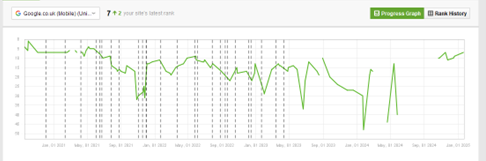
The example below shows what happened when we removed and redirected a page that wasn’t converting any traffic but ranking for a prime keyword. The ranking for that page actually improved as did the sales for this particular product.
Conclusion
Avoiding these common internal linking mistakes can dramatically improve your ecommerce site’s SEO performance. An effective internal linking strategy should aim to provide value and clarity to both users and search engines. Regular audits and adjustments based on analytic insights are crucial to maintaining an optimal structure and reaping the benefits of a well-organised ecommerce website.